The Wallarm Security Research team is pleased to share the latest version of our API ThreatStats report. This report serves as a key resource for API, Application security practitioners. It emphasizes the need for a proactive stance in API security, advocating for continuous monitoring, regular updates, and the adoption of latest advanced security solutions.
API Security Threats Continue to Grow
In today’s modern Enterprises, Application Programming Interfaces (APIs) have become the cornerstone of technological integration and innovation. As the reliance on APIs intensifies, so does the complexity and frequency of security threats against them. Our 2024 Annual API ThreatStats™ Report reveals an alarming trend in API vulnerabilities with a substantial 30.15% rise in API-related Common Vulnerabilities and Exposures (CVEs), underscoring the escalating challenge facing today’s security practitioners.

Detailed Analysis of API Vulnerabilities
The report includes a detailed breakdown of the increased API vulnerabilities and categorizes these vulnerabilities into several types, including injection flaws, broken authentication, and sensitive data exposure, among others.
For example, injection flaws alone have seen a 40% increase in frequency, illustrating a growing area of concern. The technical nuances of each vulnerability type are discussed, along with real-world breach instances that exemplify their impact.
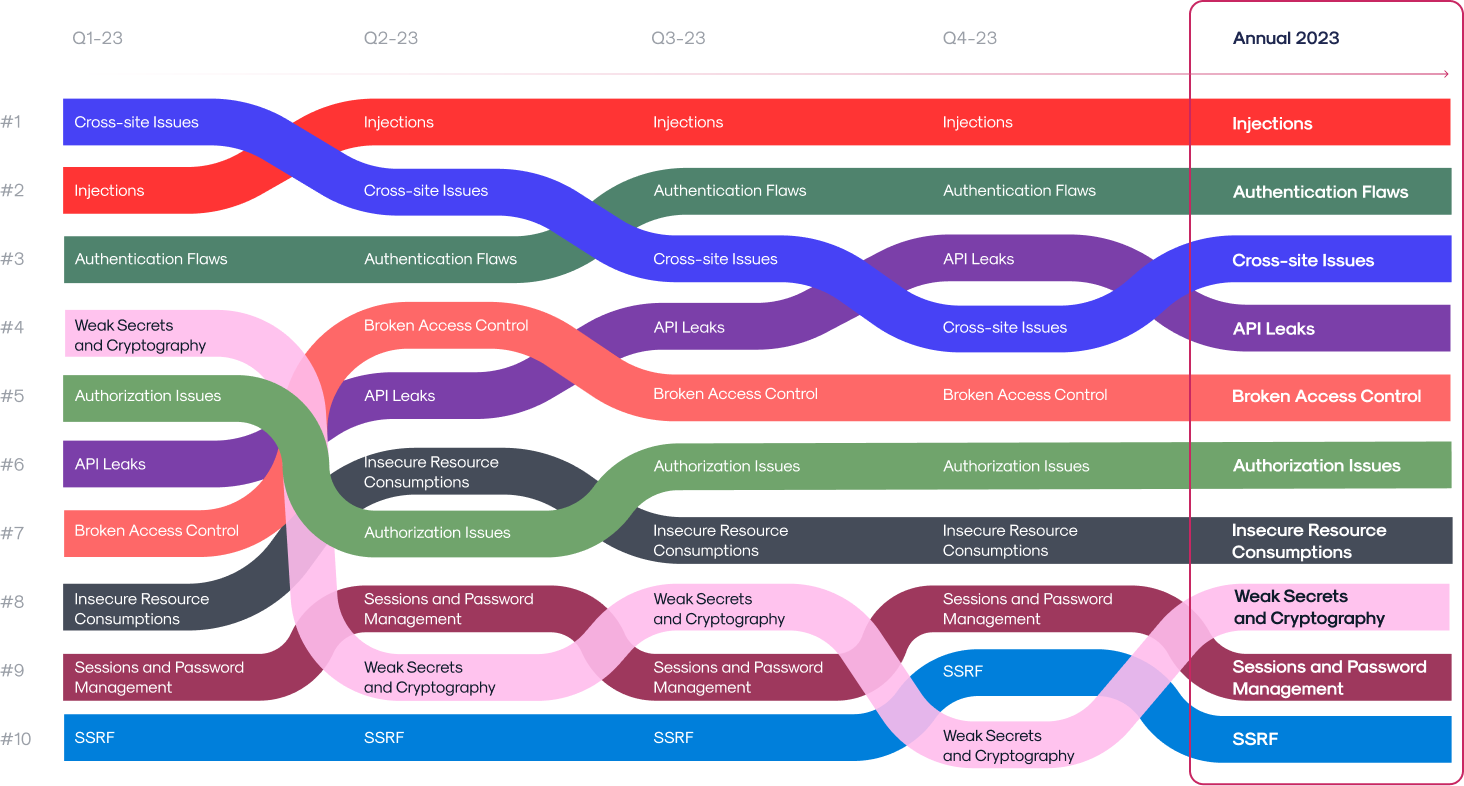
Reliance on proven frameworks such as OWASP Top 10 is a good starting point, however security practitioners need to adapt to a more dynamic Top 10 list (shown above).
In-Depth Look at API Leaks
Often overlooked, API leaks have become a critical issue, often resulting from gaps in security protocols or oversight in API management. The report details several high-profile API leaks, analyzing the root causes and subsequent data breaches. These examples highlight the need for enhanced security measures, including regular audits and robust API testing strategies. The section also discusses techniques for early detection of potential leaks, emphasizing the importance of proactive security practices.
API Security Dominated Bug Bounty Payout
In 2023, the bug bounty landscape shifted significantly, with rewards for API vulnerabilities surpassing those for traditional web flaws. The report shows increased frequency and higher payouts for API issues, notably in Broken Access Control, Vulnerable/Outdated Components, and Injection vulnerabilities. API issues garnered 1.5 times more rewards than classic web vulnerabilities, and the average payout for API vulnerabilities was 65% higher, emphasizing the growing focus on API security.
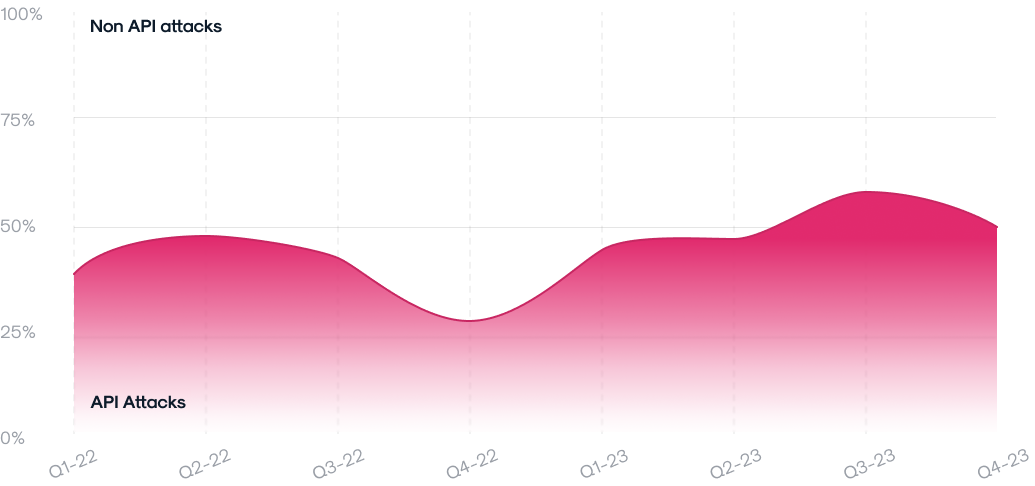
Significant API Exploits in 2023
2023 witnessed some landmark API exploits, with the report offering an in-depth analysis of incidents like the Snapchat payout and the Citrix Bleed. These case studies delve into the technical specifics of each exploit, discussing how they were executed and the broader implications for API security. The analysis also explores potential preventative measures and response strategies, providing valuable lessons for security professionals.
Based on Data Analysis
The 2024 API ThreatStats™ Report encapsulates a year’s progress in understanding and combating API security threats. It builds upon the foundations laid by the quarterly reports of 2023, offers a comprehensive view of the evolving cybersecurity challenges and the strides made in API security. It is based on analyzing real traffic and tracking common CVEs and bug bounty payouts.
Predictions for 2024 and Beyond
Looking ahead, the report predicts a continued escalation in API security challenges. It anticipates an increase in automated attacks and the potential use of AI by cybercriminals. This section discusses the implications of these emerging trends, advising security professionals on the need to adapt and stay ahead of the curve in their defensive strategies.


